Chronic Conditions
Invasive Candida
Invasive candidiasis and candidemia often require extended IV antifungal therapy after hospital discharge. Once a patient is medically stable, TwelveStone Health Partners helps continue treatment through outpatient infusion services or home infusion support.Our clinical team coordinates with hospital physicians, manages insurance verification, and helps patients transition safely from inpatient care to ongoing therapy. With more than 30 infusion centers across the Southeast, we make it easier to continue treatment while focusing on recovery.
Invasive Candida Medications
Why Invasive Candida Infections Often Require Infusion Therapy
Invasive Candida infections affect the bloodstream or internal organs and require prompt medical treatment. Because these infections can become serious quickly, patients are often started on intravenous antifungal medications in the hospital before transitioning to outpatient therapy when clinically appropriate.
Patients who commonly require ongoing antifungal infusion therapy include those with:
- Recent abdominal surgery or organ transplantation
- Weakened immune systems
- Prolonged hospital stays
- Central venous catheter-related infections
- Extended antibiotic exposure
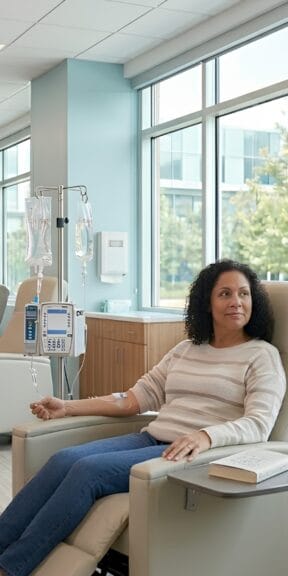
After stabilization, patients may continue treatment through an outpatient infusion program. TwelveStone works directly with hospital discharge teams and prescribing physicians to coordinate therapy, schedule appointments, and maintain continuity of care throughout treatment.
Antifungal Infusion Therapies Used for Invasive Candida Infections
Common first-line therapies include echinocandins such as caspofungin, micafungin, and anidulafungin. These medications help control fungal infections while allowing patients to continue treatment outside the hospital when appropriate.
Targeted Alternative Therapies
Once a patient is stable, healthcare providers may adjust the medication based on clinical needs:
- Fluconazole serves as a step-down option for stable patients with susceptible isolates.
- Amphotericin B is reserved for resistant strains or cases of drug intolerance.
- Rezafungin offers a once-weekly dosing option that simplifies outpatient scheduling, subject to clinical approval.
Treatment plans are adjusted based on laboratory findings, medication response, and overall clinical progress. TwelveStone coordinates these therapies under physician supervision to help patients safely continue care after hospital discharge.
Clinical Monitoring and the Transition to Outpatient Care
Transitioning from hospital to outpatient care requires structured monitoring to confirm the infection is controlled. Physicians follow a standardized protocol before discharging patients for continued therapy.
- Stabilization and IV therapy in the hospital.
- Regular blood cultures to document clearance.
- Evaluation to rule out deep-seated complications.
- Discharge to a structured outpatient plan.
Uncomplicated infections generally require treatment for at least two weeks after symptoms improve and blood cultures are negative.
More complex infections may require longer therapy and additional monitoring. Depending on your condition, physicians may recommend eye exams, echocardiograms, or removal of infected central lines before completing treatment.
TwelveStone Health Partners coordinates this transition to safely continue your invasive candida disease infusion treatment. We manage scheduling, communicate with specialists, and monitor every session.

What to Expect During Outpatient IV Antifungal Therapy
Hospital physicians determine when you can transition to outpatient invasive candida disease infusion treatment. Care proceeds through either scheduled visits to an infusion center or home infusion with nursing support.
TwelveStone coordinators work directly with your discharge planning team to schedule start dates and confirm your prescribed medication, such as daily echinocandins or weekly rezafungin.
Caregivers help manage daily logistics and safety protocols based on the required access:
- IV access: Short courses use a peripheral IV, while longer treatments require a PICC or central line.
- Daily care: Caregivers perform routine flushes, keep dressings dry, and monitor for redness or fever.
- Lab monitoring: Routine blood draws are scheduled to track liver and kidney function.
Patients can receive care at one of TwelveStone’s 30+ infusion centers located throughout Tennessee, Kentucky, Georgia, Mississippi, and Virginia, helping reduce travel burdens while maintaining access to specialized infusion services.
Navigating Insurance and Coverage for IV Antifungal Therapy
IV antifungals for invasive candidiasis typically require benefits verification and prior authorization, especially for specialty medications in outpatient settings. To avoid care delays, TwelveStone Health Partners has dedicated financial counselors to handle the administrative process.
Our care coordinators work with your insurance provider and prescribing clinical team to verify benefits, coordinate prior authorization paperwork, and explore copay assistance.
This support helps clarify expected out-of-pocket costs before your invasive candida disease infusion treatment begins. Because coverage varies by plan, medical indication, and site of care, starting verification early is recommended. Patients can review our patient resources page to understand paperwork expectations.
Your Partner in Invasive Candida Infusion Therapy
TwelveStone Health Partners helps patients safely continue invasive candida disease infusion treatment after hospital discharge through outpatient infusion centers and home infusion services.
Our PharmD-led clinical team coordinates with physicians, manages insurance requirements, and provides ongoing clinical support throughout therapy. With more than 30 infusion centers across the Southeast, we make it easier to access specialized infusion care while focusing on recovery.

Ashley Mcgee
Absolutely loved this place amazing staff and made you feel well taken care of! Would give more than 5 if I could on the stars! 🩷⭐️⭐️⭐️⭐️

David Brandes

Ronetta Witherspoon

Mandy Leitsch

Kay Duncan
Hardly no waiting, awesome nurses. A good place to have to go get infusions.

Robert Holloway

Minnie Toler
They were so welcoming and caring.They had a whiteboard with a greeting and personal welcome from their staff. They also always made sure that I was always comfortable.

Maurice Carter
I've been twice so far for my monthly injection. These are the kindest, nicest, most pleasant people! But also quick and efficient. I was in and out in less than 10 minutes this week.

Ashley Mondesir
I had an absolutely incredible experience at Twelvestone in Smyrna. Loraine, Leah, and Leoneed were fantastic. All so caring, patient, and attentive. I have had a longtime fear of needles but knowing I will have the support of such a lovely team with those incredible women when I come in for infusions will put me at such ease. Fantastic team!

Marion Jones

Domitila Craighead
I have been using Twelve Stone for almost three years now. The staff is very caring and always trying to make the experience as pleasant as possible. They are always willing to answer any questions you may have and do everything to make you comfortable

Tiffany Smith

catherine jameson
Nice comfortable atmosphere. The staff was very proficient, knowledgeable and friendly and made me feel very comfortable In spite of my nervousness and apprehension of getting the infusion. Thanks for your professionalism.

Catherine Jameson

KentuckyGuy
Very professional and kind staff. Sadly, I’ve had to use them twice now. If you end up at TwelveStone know that you are in good hands.

A Williams
We had a very pleasant and relaxing experience at TwelveStone Infusion center today for my mom’s treatment! Everyone in the office was extremely nice and welcoming. We really felt at home there and the snacks were a huge blessing! Thank you Jessica, Sarah and Megan, y’all are amazing!! And Jennifer at the front, we appreciate your kindness and helpful heart!

Terri Gamble
Great experience at Twelvestone Infusion center. Great location. The facility was clean, individual rooms made me comfortable while getting my infusion. The. . receptionist to nurses were friendly and efficient. Highly recommend using them.

Vk Reece
Sarah and Stacy were jewels. It started at the Reception desk and in the infusion room. Everything went Exceptionally well. THANK YOU ❣️

Sky Stephens
I would recommend this facility to everyone. Ms Chelsea and Ms Jordan were so helpful. These ladies are amazing... Thank you for taking care of my dad.... 100% And 5 Stars for me

Rachel McClure
Even though I go there for treatment, I always enjoy going. That bunch there is like family. I’ve never been to any other place that makes each patient feel so special. Highly recommend Twelve Stone in Murfreesboro Tn.

Charmayne Calhoun
They always have the best nurses and practitioners there. The front office lady is really nice. I like how they run a "tight schedule" in the most respectful way. Making sure all scheduled patients are seen on time. Great facility to get your infusions from.

Charmaine Williams

Rachel Lee
This is a wonderful place to get your infusions done. The staff are very friendly and welcoming and very knowledgeable with their nursing care. The facility is very home-like and comforting. Their God centered environment practice was refreshing to see. I 10/10 recommend.

Sue Hirsbrunner
Everyone was so kind and helpful. My nurses were Meagan and Stephanie. They were both very helpful. It was very interesting and I really liked the facility and especially my nurse Stephanie.

Norma Velasco
Everyone at this facility very pleasant and informative. So glad my Physican referred me to this location. See

Leigh Tribble
While one would hope that you would never have to go to a facility of this nature, I can say with complete honesty that we felt nothing but empathy, kindness and heartfelt care at this infusion center. Absolutely the most professional and kind medical facility and staff we have encountered.
Organizational Resources
The Centers for Disease Control and Prevention’s (CDC) Emerging Infections Program (EIP) monitors Candida bloodstream infections in certain areas. The CDC also collects data on healthcare-associated infections through the National Healthcare Safety Network (NHSN).

GLASS started a global collaborative effort to compile available data on invasive fungal infections, including Candida spp. Although less known to the general public, fungi are major causes of human disease and death, and resistance to antifungal medications is a growing problem, similar to antibiotic drugs.

The Infectious Diseases Society of America is a medical association representing physicians, scientists, and other healthcare professionals who specialize in infectious diseases.